
Am I Saving Enough for Retirement?
Most Irish employees in company pension schemes don’t know if they’re on track — and their annual pension statement isn’t giving them the full picture.
The Problem With Your Annual Pension Statement
Every year, if you’re a member of a company pension scheme, you receive a statement (or you have access to view your pension via a portal).
It tells you your current fund value, your contribution rate, and – crucially – a projected retirement income. Most people glance at that figure and either feel vaguely reassured or vaguely worried, but few fully understand what it means.
Here’s the issue: that projected income figure is almost always calculated on the assumption that you will use your entire pension fund to purchase an annuity at retirement. An annuity is a guaranteed income for life, purchased from an insurance company. At current annuity rates, the income it produces can look modest – even on a sizeable fund.
The problem is that the vast majority of people retiring today do not purchase an annuity. Most opt instead for an Approved Retirement Fund (ARF), which keeps their money invested and allows them to draw it down flexibly over retirement. The projected income on your annual statement is therefore based on a retirement option that most people won’t use – which means it can significantly understate what a well-managed pension fund could realistically provide you in retirement.
So if your annual statement has ever left you confused or disheartened, this is almost certainly why.
Check us out in the media by clicking on this image
The Questions Your Statement Doesn’t Answer
Many people would consider that if they are a member of an Occupational Pensions Scheme, and they and their employer have always contributed, that they will have sufficient pension income to enable them to retire at the retirement age specified by the scheme – this isn’t necessarily the case at all.
The member contribution and matching employer contribution which apply to your pension scheme is not set at a level which is calculated will provide a sufficient income for you in retirement – they are set with regard to the following;
- minimums set by the Minister for Social Protection (these are very low)
- the cost the employer is prepared to bear
- the norm in your particular industry and
- if staff retention is an issue for the employer, what is competitive in your industry.
None of these factors are related in any way to the income you will need in retirement.
It follows then, that most people will need to make additional provision if they are to maintain their standard of living in retirement.
Your annual statement tells you what your fund is worth today. What it doesn’t tell you is:
- Whether your current contribution rate is enough to retire when you want to, on the income you need
- Whether you are using your full Revenue-allowable tax relief – and if not, what you’re giving up
- Whether you should be making Additional Voluntary Contributions (AVCs) and, if so, how much
These are the questions that actually matter. And they’re the questions we help our clients answer.
Use It or Lose It – Revenue’s Age-Related Pension Contribution Limits
One of the most underused benefits available to PAYE employees in Ireland is the age-related tax relief limit on pension contributions. Revenue allows you to contribute a percentage of your gross salary to a pension in personal contributions and claim income tax relief at your marginal rate – currently 40% for higher-rate taxpayers. That means every €100 you contribute costs you just €60 after tax relief.
The percentage you can contribute tax-efficiently increases with age:
| Age | Maximum % of gross salary |
| Under 30 | 15% |
| 30–39 | 20% |
| 40–49 | 25% |
| 50–54 | 30% |
| 55–59 | 35% |
| 60 and over | 40% |
(Subject to a maximum earnings cap of €115,000)
Most people contribute well below their age-related limit – often because nobody has ever told them what it is or what they need to contribute to secure a pension which will allow them to have a comfortable retirement. Another important point is this: if you don’t use this relief in the tax year, you lose it. Unlike some tax reliefs, unused pension contribution relief cannot be carried forward. Every year you under-contribute at the higher rate of tax is a year you cannot recover.
This is why reviewing your pension contribution level regularly isn’t a nice-to-have – it’s one of the most valuable financial decisions you can make.
Should I Be Making AVCs?
If you’re a member of a company pension scheme, you may be able to make Additional Voluntary Contributions – AVCs – on top of your regular contributions. AVCs are simply additional pension savings that attract the same tax relief as your normal personal contributions. You can make these to your scheme or, if you prefer to an arrangement held in your own name – an AVC PRSA.
AVCs are particularly valuable when:
- Your own regular contributions and the employer match won’t produce a fund which will enable you to retire at your desired retirement age or with the retirement income you need
- You’re targeting an earlier retirement date than your current trajectory supports
- You have funds you wish to invest for the long term – if your current contributions don’t bring you up to your age-related Revenue limit then investing through AVC’s will be far more tax effective
- You’ve had career breaks, periods of part-time work, or started your pension later than you’d have liked, and want to close the gap
- You want to maximise your tax-free lump sum at retirement
The right AVC level for you depends on your age, salary, existing fund value, years of service, retirement age target, and the income you’ll need in retirement. It isn’t a number that can be plucked from a table – it requires a proper calculation based on your individual circumstances.
A Worked Example
Ciara is 44, earns €110,000 per year, and has been a member of her employer’s pension scheme for 14 years. She contributes 5% of salary; her employer contributes 5%. Her current fund is €295,000. She’d like to retire at 63.
At 44, Ciara can make personal contributions of up to 25% of her salary and claim income tax relief – that’s €27,500 per year. Her own 5% contribution amounts to €5,500, leaving €22,000 of unused personal tax relief every year. At the 40% tax rate, directing that full €22,000 into AVCs would cost her just €13,200 net – approximately €1,100 per month after tax relief.
Her annual pension statement projects a retirement income based on an annuity that looks modest relative to her current salary. But that figure doesn’t reflect what a properly structured ARF could realistically deliver – and it certainly doesn’t reflect what additional AVC contributions between now and age 63 could add to her outcome.
We can discuss with Ciara when she wants to retire and what income she will need to sustain her standard of living in retirement. We can then calculate the fund she would need to produce the desired income and we can tell her what level of AVC’s she needs to make to have a reasonable prospect of accumulating that fund.
This is the kind of calculation we carry out for clients like Ciara every day, so that they can see clearly what the choices they make today mean for their future. If you wish we can even model your finances to show you what your current trajectory is, and how it changes if you follow our recommendations.
What About the State Pension?
The State Pension is a meaningful source of retirement income for many people and an important consideration in any retirement plan. How much weight you give it, however, depends on where you are in your career.
If you are approaching retirement and have a full PRSI contribution record, it is reasonable to factor the State Pension into your planning with a reasonable degree of confidence. If you are in your 30s or 40s, the picture is less certain – the age at which the State Pension becomes payable has already increased, and its long-term structure remains subject to ongoing policy discussion.
We can help you factor your future State Pension entitlement into your retirement projections in a way that is appropriate to your age and circumstances – neither ignoring it nor treating it as a certainty which it may not be.
How We Help
Answering the question “am I saving enough?” properly requires more than a quick estimate. It requires a detailed cashflow modelling exercise – one that takes into account your current fund, contribution levels, projected growth, intended retirement age, income needs in retirement, tax-free lump sum entitlement, and any other assets or income sources that will form part of your retirement picture.
We use Voyant cashflow planning software to model your financial future in detail, run multiple retirement scenarios, and show you clearly what your retirement looks like under different contribution and retirement-age assumptions. This is financial planning – not a product sale.
If you have never had a proper pension review, or if you suspect your contributions may not be enough but aren’t sure, we’d be glad to help.
Ready to Find Out If You’re on Track?
Get in touch for a free, no-obligation conversation. We’ll put you on the road to the retirement you want.
📞 01 546 1100 📧 [email protected] 🗓 Book a video call
Frequently Asked Questions
How much should I be contributing to my pension in Ireland? It depends on your age. Revenue allows personal contributions of between 15% and 40% of gross salary (capped at €115,000) for income tax relief purposes, with the limit increasing as you get older. Many people contribute significantly less than their allowable limit and are unaware of the relief they are forfeiting each year.
What is an AVC and how does it work? An Additional Voluntary Contribution (AVC) is an extra personal contribution you make to your occupational pension scheme, above your normal contribution rate. AVCs attract the same income tax relief as regular contributions – up to your age-related Revenue limit – making them one of the most tax-efficient savings options available to PAYE employees.
What is the maximum AVC I can make? In order for your contributions to attract tax relief your total personal contributions – regular plus AVC – cannot exceed your age-related Revenue limit (15%-40% of salary depending on age, subject to the €115,000 earnings cap). Your employer’s contributions do not count against this personal limit.
Can I make a once-off lump sum AVC? Yes. As well as regular monthly AVCs, you can make single lump sum AVC contributions – for example, if you receive a bonus or come into a sum of money. You can also make a lump sum AVC before 31 October in a given year and elect to have it treated as a contribution for the previous tax year, which can be useful for tax planning purposes.
When can I retire? The normal retirement age under most occupational pension schemes is 65, but many schemes allow earlier retirement from age 60, depending on scheme rules. If you have left the employement you can generally access your pension from age 50. The key question is not just when you are permitted to retire, but when you can afford to retire on the income you need. That’s where we can add value.
CONTACT US
By Telephone 01 546 1100
Use the Form on this Page
Email to [email protected]
Book a Zoom call with us here.
Happy to start the process? Click here to complete a factfind and tell us your objectives
The material and information contained on this website is for general information purposes only. Neither the writer nor Highfield Financial Planning Ltd makes any warranty as to the completeness, accuracy or reliability of the information or the suitability or availability of products or services, referred to on the website, for any purpose. You should not rely on any information contained on this website as a basis for making any financial, legal, taxation or other decision. The information presented does not include all the considerations which are relevant to the topic discussed as to do so would render it un-readable. When considering any financial issue you should seek the advice of a suitably qualified adviser.
BOOK A FREE NO-OBLIGATION CHAT
By Telephone 01 546 1100
Use the Form on this Page
Email to [email protected]
Book a Zoom call with us here.
Happy to start the process? Click here to complete a factfind and tell us your objectives
The material and information contained on this website is for general information purposes only. Neither the writer nor Highfield Financial Planning Ltd makes any warranty as to the completeness, accuracy or reliability of the information or the suitability or availability of products or services, referred to on the website, for any purpose. You should not rely on any information contained on this website as a basis for making any financial, legal, taxation or other decision. The information presented does not include all the considerations which are relevant to the topic discussed as to do so would render it un-readable. When considering any financial issue you should seek the advice of a suitably qualified adviser.
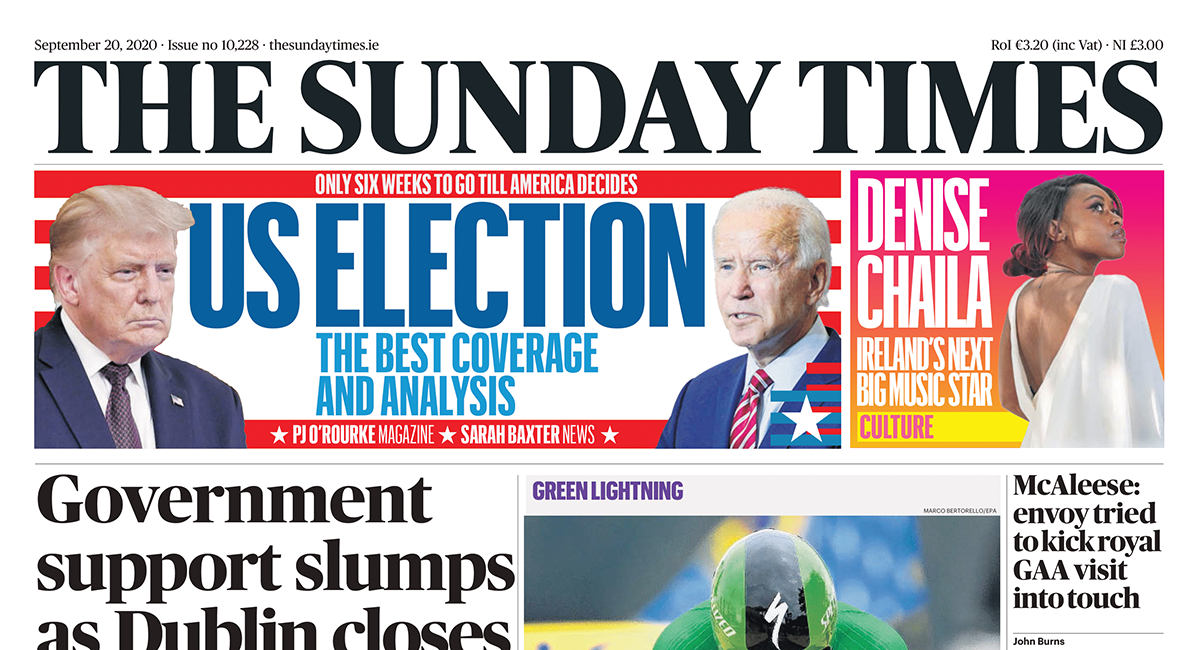
Highfield Financial Planning in the Media
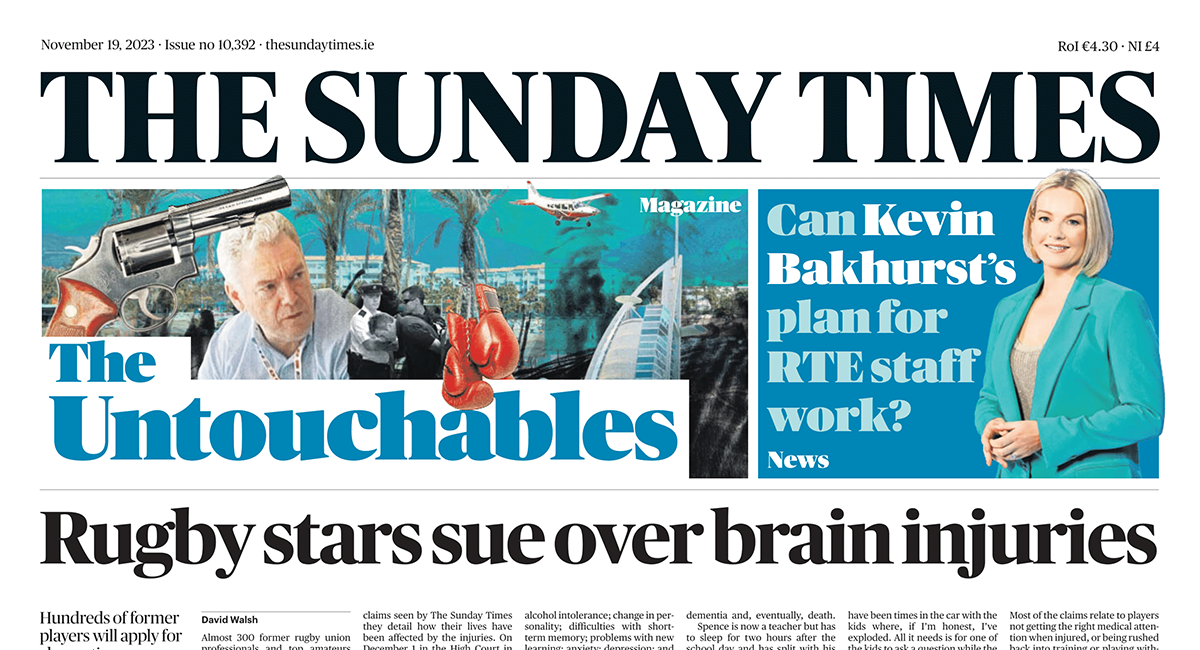
The Sunday Times
In the sport of target pistol shooting there is a saying, “slow is smooth, smooth is fast”, which refers to the way to approach drawing and firing a pistol quickly and accurately. The learner shooter who focuses on practising the correct technique slowly, only building in speed later, will win the day nine times out of ten.
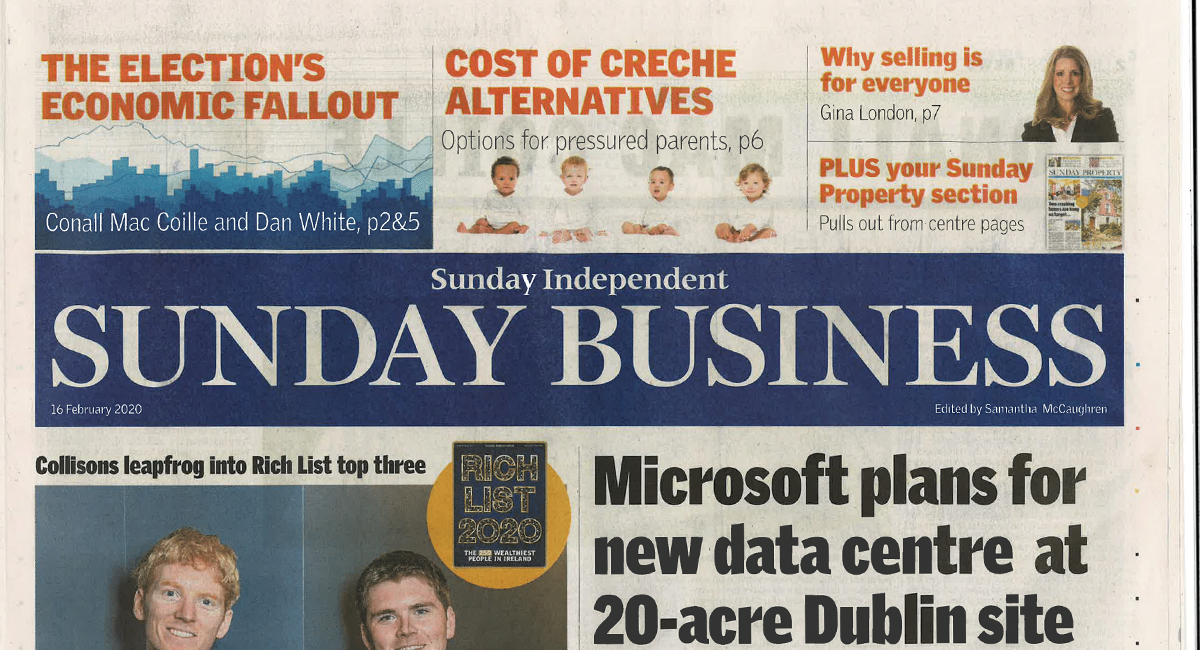
The Sunday Independent
A pension is a term that can seem distant to many, especially if you’re at the beginning of your career. But it is a vital part of long-term financial planning, designed to provide you with a source of income in your retirement years. As the pension landscape continues to evolve, understanding the fundamentals and staying informed about the changes is crucial. So, what do you need to know?
The Sunday Times
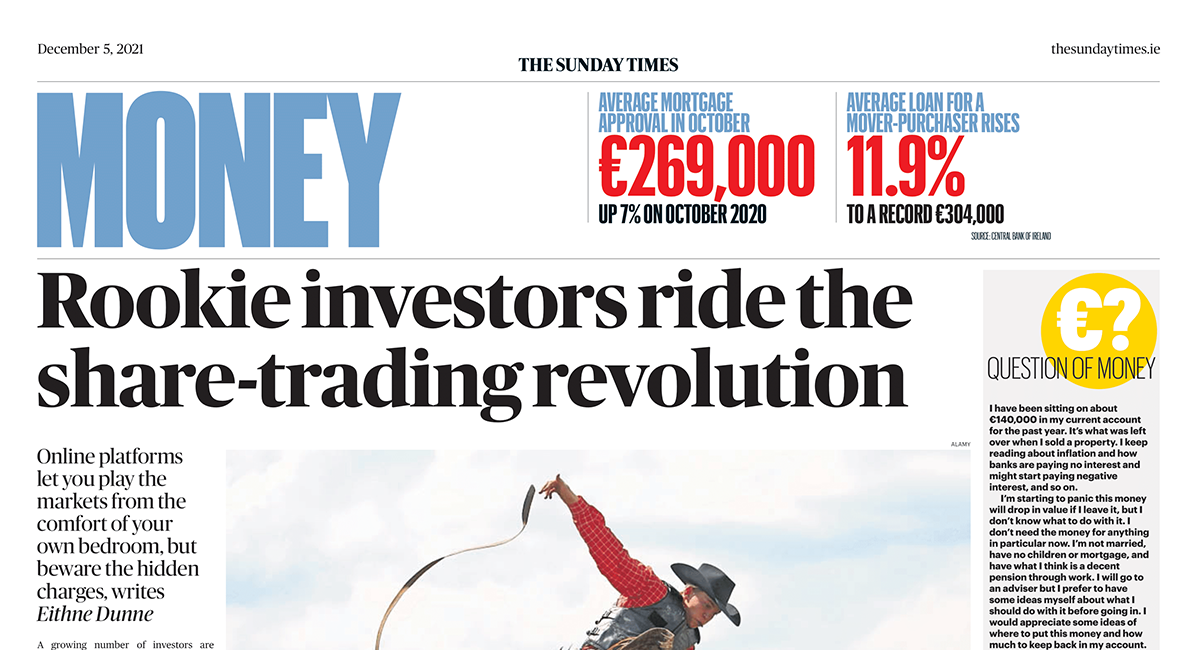
I have been sitting on about €140,000 in my current account for the past year. It’s what was left over when I sold a property. I keep reading about inflation and how banks are paying no interest and might start paying negative interest, and so on.
The Sunday Times
Would-be investors have a difficult decision to make when considering their options. If they are going to increase their wealth, they will need, at a minimum, to beat inflation and whatever they are paying in charges.
Business Post
If you’re at the beginning of your working life or are simply new to pensions, we look at what you need to know
The Sunday Times
The phrase “Morton’s fork” can be traced back to the time of King Henry VII in the 15th century, when John Morton, then the Archbishop of Canterbury and lord chancellor, rationalised that a tax levied by the king was just.
Sunday Independent
Q I HAVE €150,000 which I want to invest for between 10 and 15 years — with a view to using it to fund my retirement in the future. I’m 50 years old. I am interested in property investment and had considered using the lump sum to buy a property outright.
The Sunday Times
If I asked 10 people on the street how long they thought pensions had existed, what do you think they would say? Since the 1960s, the formation of the state, or Victorian times?
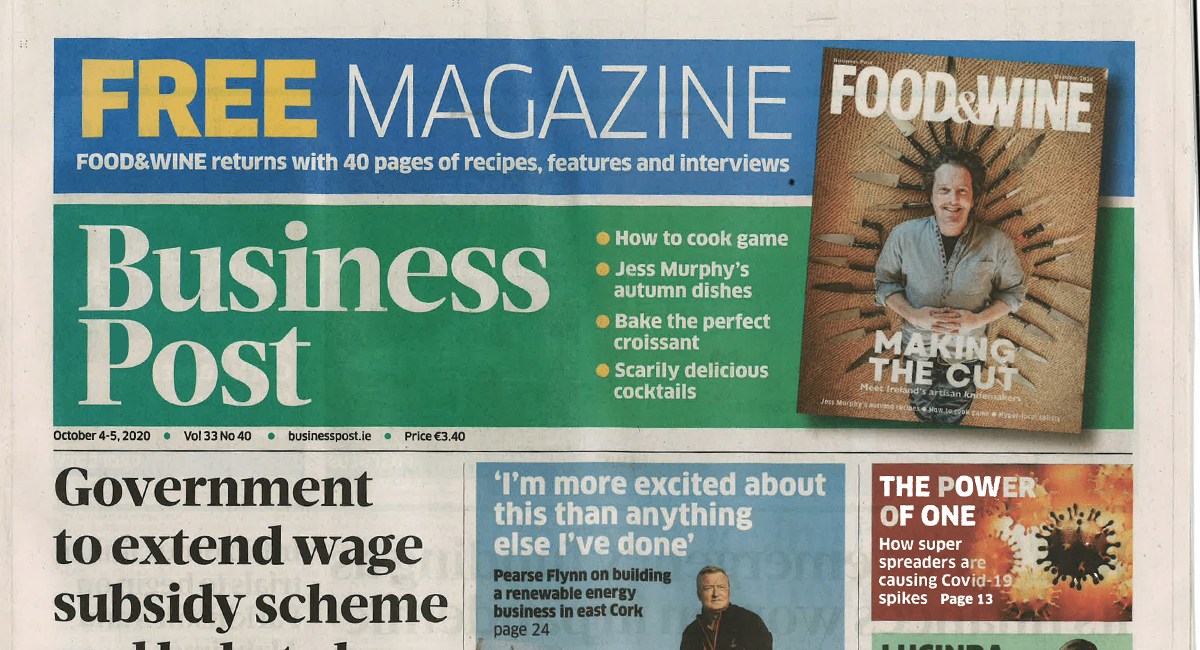
Business Post
No matter how far away you are from retirement, it is always a good time to start a pension or to build up your contributions. And the tax benefits are considerable, writes Siobhán Maguire
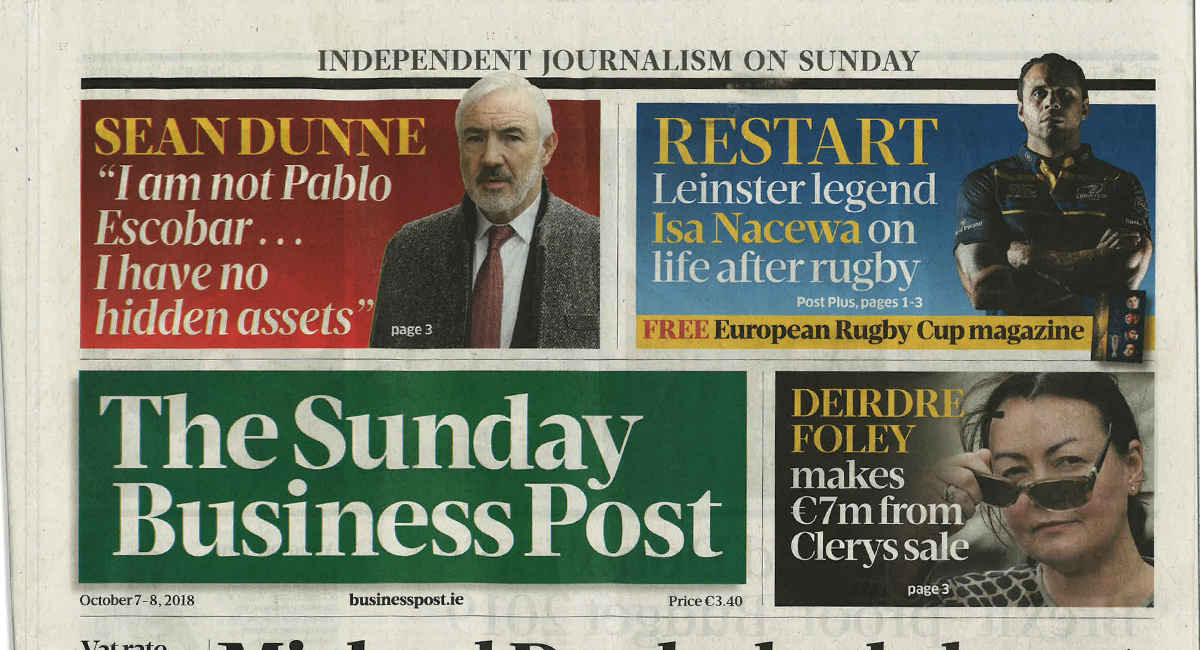
Sunday Business Post
The area of pension guidance can be a minefield, but it’s one which Highfield Financial Planning is happy to negotiate for its clients
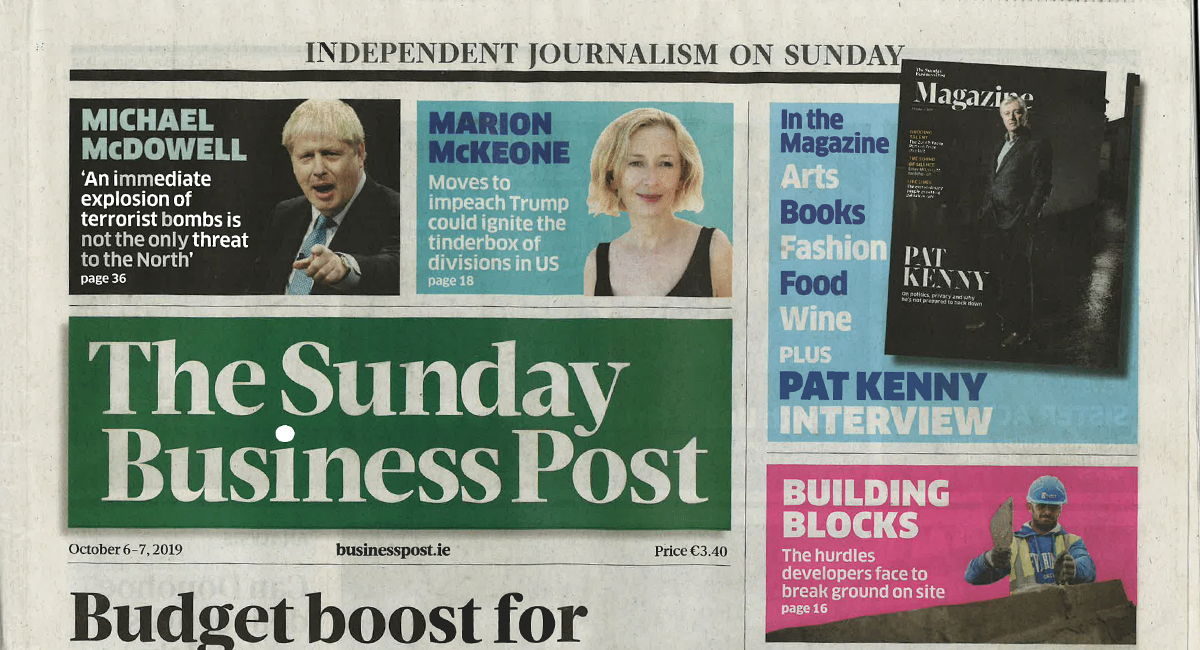
Sunday Business Post
Eoghan Gavigan, a specialist investment adviser and certified financial planner at Highfield Financial Planning, has advice for those looking to start a pension, writes Siobhán Maguire
About Highfield Financial Planning
We provide superior advice on Financial Planning services to business owners, professionals and their families. The principal of the firm Eoghan Gavigan has over 29 years’ experience in banking and finance across Treasury, Lending and Wealth Management and is a Qualified Financial Adviser (QFA) and a Certified Financial Planner (CFP). The CFP qualification is the world’s most respected industry designation, held by only a select number of advisers. As Specialist Investment Advisers we can provide you with detailed investment advice on your pensions and investments.
We want you to be comfortable in your dealings with us. We provide a number of suggestions here for ways that you may be able to obtain comfort that we are the right Financial Planner for you.






Want to hear more?
Make contact today and we’ll tell you more about the kind of work we do.
CONTACT USBOOK A VIDEO CALL