
College Funding
How Much Does College Actually Cost in Ireland?
The student contribution charge is currently €3,000 per year – payable for each year of a four-year degree. That’s €12,000 in fees alone per child, before accommodation, books, travel, or living costs are factored in. For a student living away from home in Dublin or another city, total costs can easily reach €15,000 to €20,000 per year.
If you have two children, you could be looking at a combined outlay of €120,000 or more – and that figure rises every year with inflation.
The Sooner You Start, the Less It Costs You
The most powerful tool in education funding is time. A parent who starts saving when their child is born has 18 years for their money to grow. A parent who waits until secondary school has five. The monthly savings required are dramatically different – and the gap widens every year you delay.
We build a personalised College Funding Plan for each family, calculating:
- The inflation-adjusted cost of college for each child
- The lump sum (sinking fund) you need to have in place by the time fees are due
- The monthly savings required, starting today, to reach that target
- The investment approach that balances growth with security as the college date approaches
Where Should You Save?
There is no dedicated tax-free education savings vehicle in Ireland (unlike pensions, which attract significant tax relief). However, a regular premium investment plan – structured correctly, in your name rather than the child’s – gives you flexibility, growth potential, and full control over the funds. We will recommend the most appropriate approach based on your timeline and attitude to investment risk.
College Funding as Part of a Bigger Picture
College fees rarely arrive in isolation. They typically coincide with mortgage repayments, retirement saving, and in many families, the costs of a second property or a business. Our Cashflow Modelling service shows you the full picture – how college spending interacts with your other financial goals, and whether you are genuinely on track to fund everything without compromising your retirement.
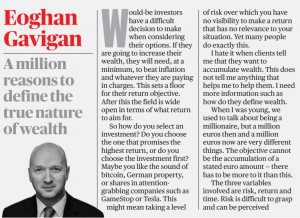
Our recent article in The Sunday Times illustrates the benefits of Holistic Financial Planning (bottom of page).
Ready to Start the Process?
Get in touch for a free, no-obligation conversation. We’ll help you find out what you have, what your options are, and what the most sensible next step looks like for your situation.
📞 01 546 1100 📧 [email protected] 🗓 Book a video call
College Funding FAQ’s
How much does it cost to send a child to college in Ireland?
The student contribution charge is €3,000 per year, giving a minimum tuition cost of €12,000 for a four-year degree. Add accommodation, food, travel, and living costs and total expenditure for a student living away from home can reach €15,000 to €20,000 per year – or €60,000 to €80,000 over a four-year course.
When should I start saving for my child’s college education?
As early as possible – ideally from birth. Starting at birth gives you 18 years of investment growth working in your favour and keeps required monthly contributions low. Waiting until secondary school significantly increases the monthly amount required and reduces your flexibility if markets underperform.
Does Ireland offer any tax relief on college savings?
There is no dedicated tax-free education savings account in Ireland, unlike pension contributions which attract income tax relief. However, investment gains on savings held in a regular premium plan are subject to exit tax at 38%, with deemed disposal applying every 8 years.
What is the SUSI grant and will my family qualify?
SUSI (Student Universal Support Ireland) provides means-tested grants covering maintenance costs and/or the student contribution charge. Income thresholds change annually. Many middle-income families will not qualify for the full grant, though partial grants may be available.
How do I calculate how much I need to save each month for college?
The calculation involves three steps: first, inflate the current cost of college to the year your child will attend (using an assumed inflation rate); second, calculate the lump sum (sinking fund) needed to fund those future costs; third, calculate the monthly savings contribution required, assuming a realistic net investment return, to accumulate that lump sum by the time fees fall due. We do this calculation for every client with children.
Can I save for more than one child’s education at the same time?
Yes, and it is more efficient to plan for multiple children together. The funding timelines overlap – typically your first child starts college while you are still saving for your second. A combined savings plan accounts for both timelines and calculates a single monthly contribution that funds both goals efficiently.
What happens to the savings if my child does not go to college?
Because we structure education savings in the parent’s name rather than the child’s, you retain full ownership and control of the funds. If your child does not pursue third-level education, the savings can be redirected toward any other financial goal – retirement, a property purchase, or simply held as a financial reserve.
How does college funding planning fit into a broader financial plan?
College funding is one of several competing demands on your income – alongside mortgage repayments, pension contributions, protection cover, and retirement planning. A holistic financial plan, supported by cashflow modelling, shows you how all these goals interact, flags any funding gaps, and helps you prioritise spending and saving across your full financial picture.
CONTACT US
By Telephone 01 546 1100
Use the Form on this Page
Email to [email protected]
Book a Zoom call with us here.
Happy to start the process? Click here to complete a factfind and tell us your objectives
The material and information contained on this website is for general information purposes only. Neither the writer nor Highfield Financial Planning Ltd makes any warranty as to the completeness, accuracy or reliability of the information or the suitability or availability of products or services, referred to on the website, for any purpose. You should not rely on any information contained on this website as a basis for making any financial, legal, taxation or other decision. The information presented does not include all the considerations which are relevant to the topic discussed as to do so would render it un-readable. When considering any financial issue you should seek the advice of a suitably qualified adviser.
BOOK A FREE NO-OBLIGATION CHAT
By Telephone 01 546 1100
Use the Form on this Page
Email to [email protected]
Book a Zoom call with us here.
Happy to start the process? Click here to complete a factfind and tell us your objectives
The material and information contained on this website is for general information purposes only. Neither the writer nor Highfield Financial Planning Ltd makes any warranty as to the completeness, accuracy or reliability of the information or the suitability or availability of products or services, referred to on the website, for any purpose. You should not rely on any information contained on this website as a basis for making any financial, legal, taxation or other decision. The information presented does not include all the considerations which are relevant to the topic discussed as to do so would render it un-readable. When considering any financial issue you should seek the advice of a suitably qualified adviser.
Highfield Financial Planning in the Media
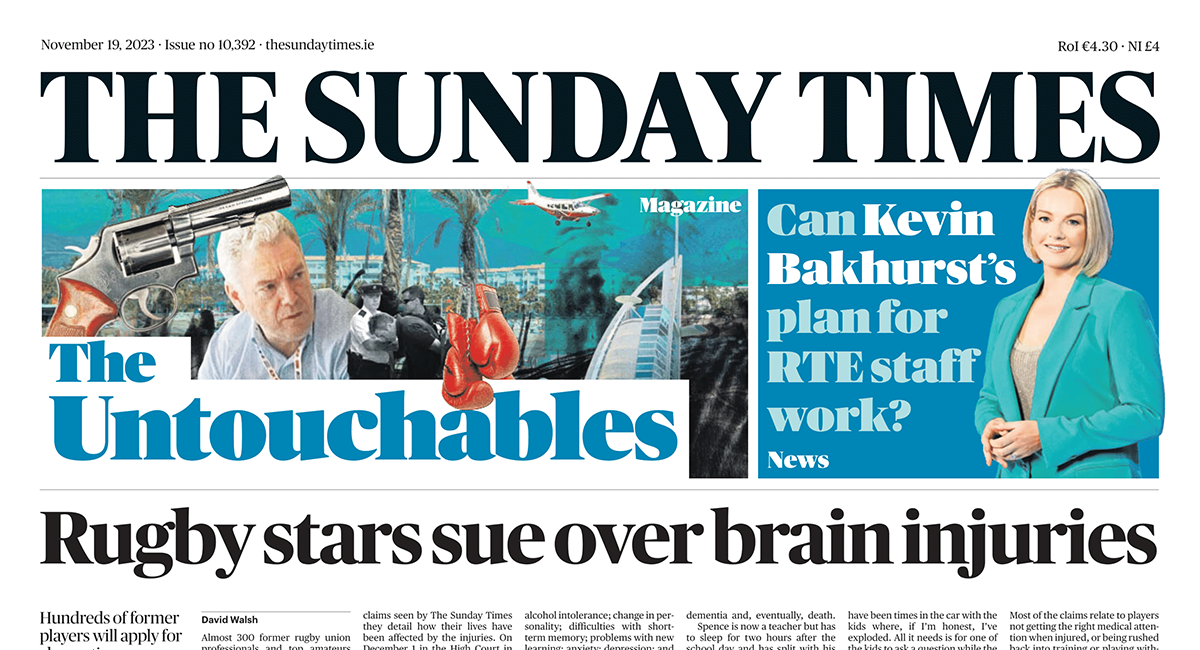
The Sunday Times
In the sport of target pistol shooting there is a saying, “slow is smooth, smooth is fast”, which refers to the way to approach drawing and firing a pistol quickly and accurately. The learner shooter who focuses on practising the correct technique slowly, only building in speed later, will win the day nine times out of ten.
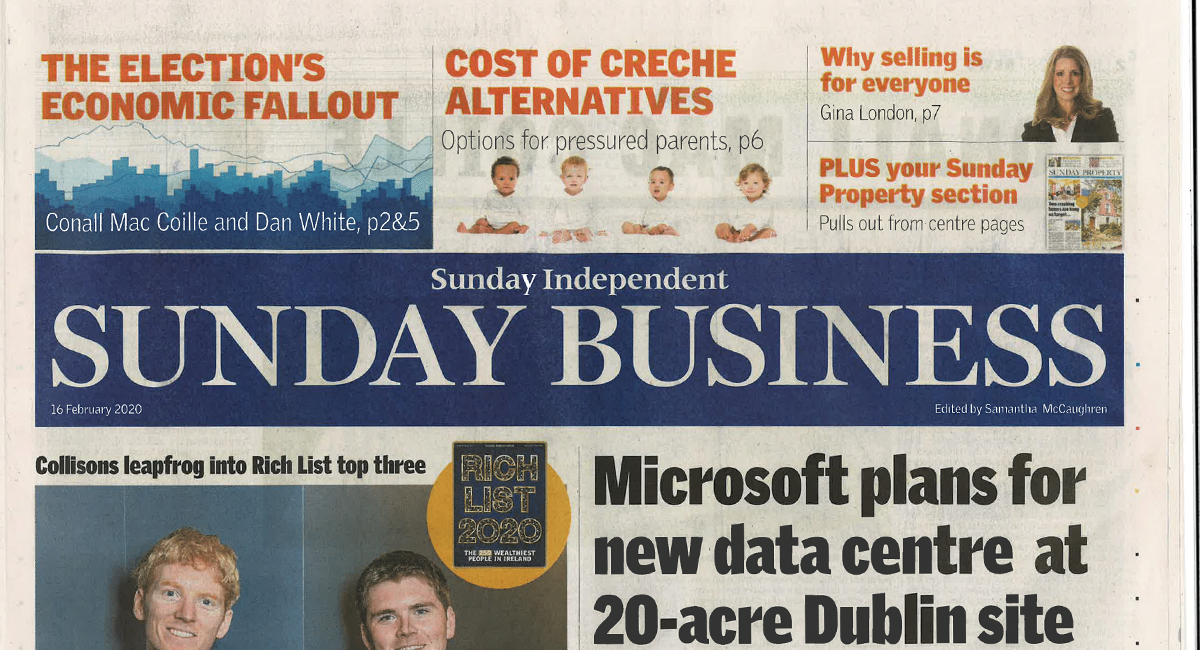
The Sunday Independent
A pension is a term that can seem distant to many, especially if you’re at the beginning of your career. But it is a vital part of long-term financial planning, designed to provide you with a source of income in your retirement years. As the pension landscape continues to evolve, understanding the fundamentals and staying informed about the changes is crucial. So, what do you need to know?
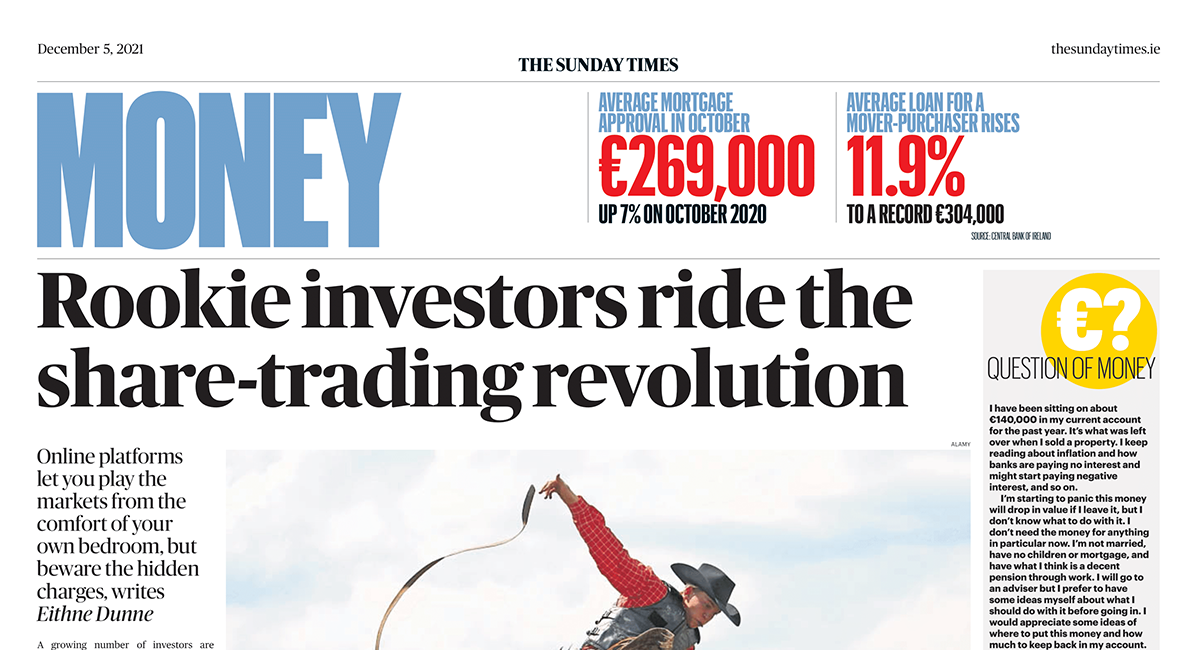
The Sunday Times
I have been sitting on about €140,000 in my current account for the past year. It’s what was left over when I sold a property. I keep reading about inflation and how banks are paying no interest and might start paying negative interest, and so on.
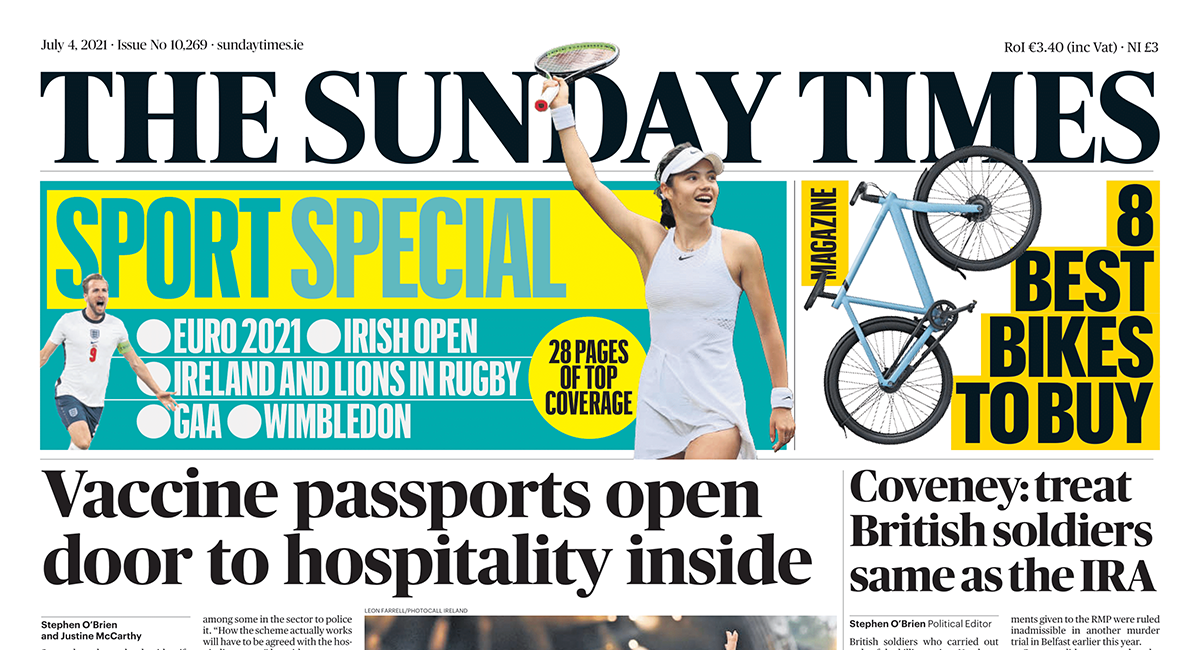
The Sunday Times
Would-be investors have a difficult decision to make when considering their options. If they are going to increase their wealth, they will need, at a minimum, to beat inflation and whatever they are paying in charges.
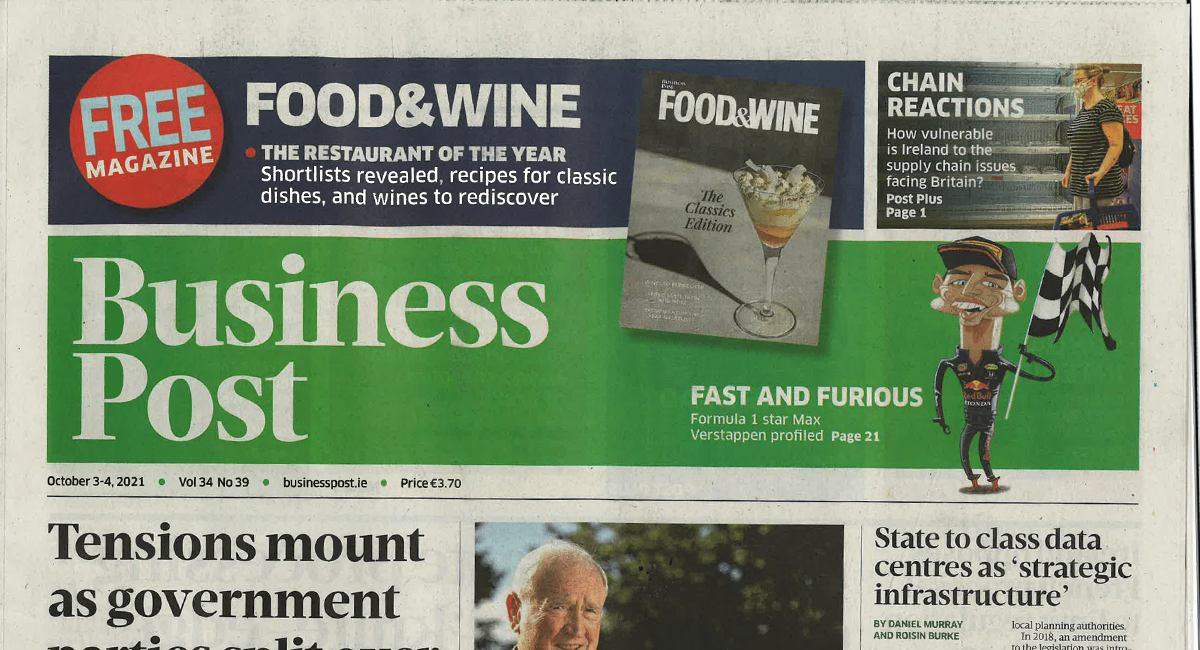
Business Post
If you’re at the beginning of your working life or are simply new to pensions, we look at what you need to know
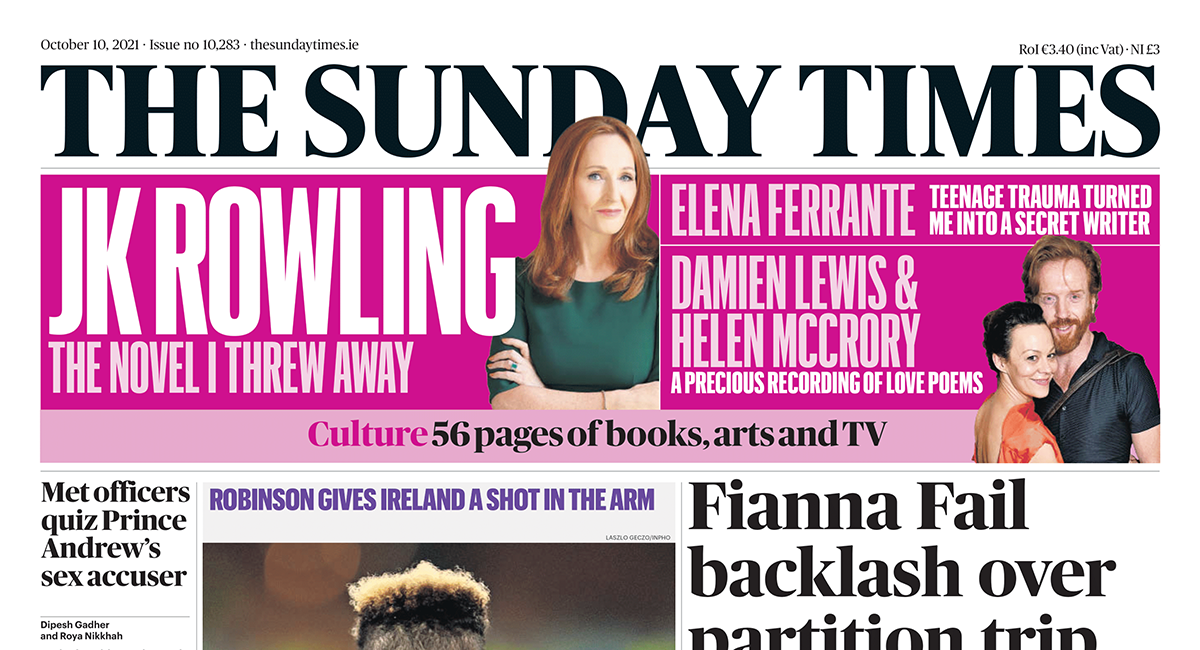
The Sunday Times
The phrase “Morton’s fork” can be traced back to the time of King Henry VII in the 15th century, when John Morton, then the Archbishop of Canterbury and lord chancellor, rationalised that a tax levied by the king was just.
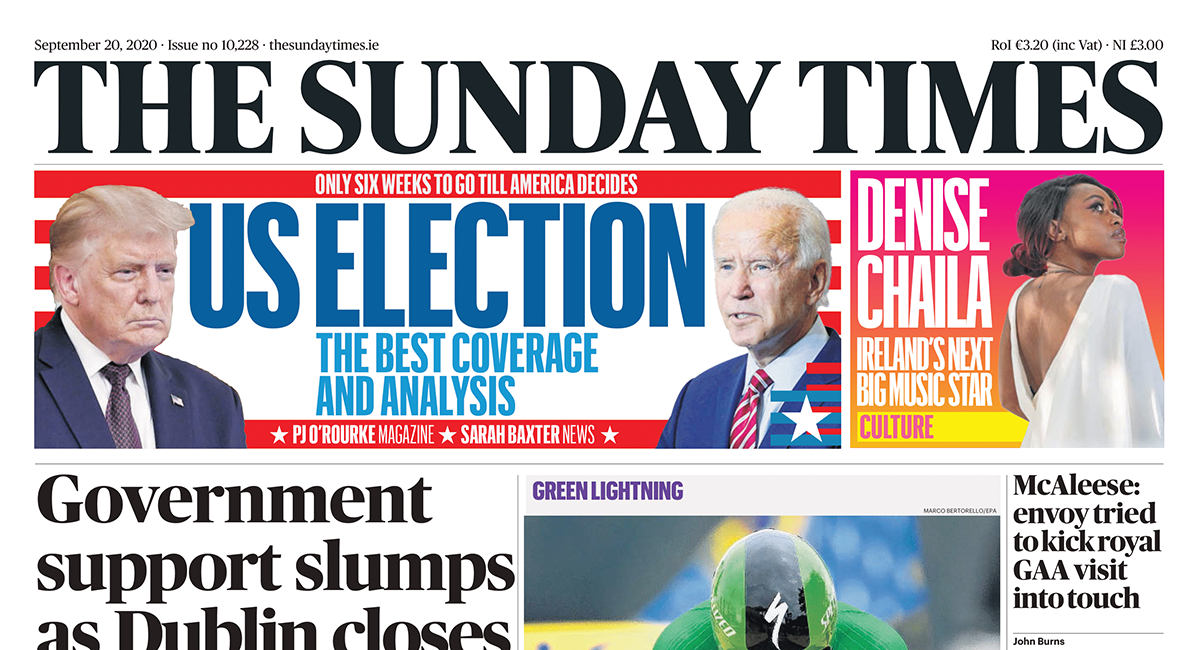
Sunday Independent
Q I HAVE €150,000 which I want to invest for between 10 and 15 years — with a view to using it to fund my retirement in the future. I’m 50 years old. I am interested in property investment and had considered using the lump sum to buy a property outright.
The Sunday Times
If I asked 10 people on the street how long they thought pensions had existed, what do you think they would say? Since the 1960s, the formation of the state, or Victorian times?
Business Post
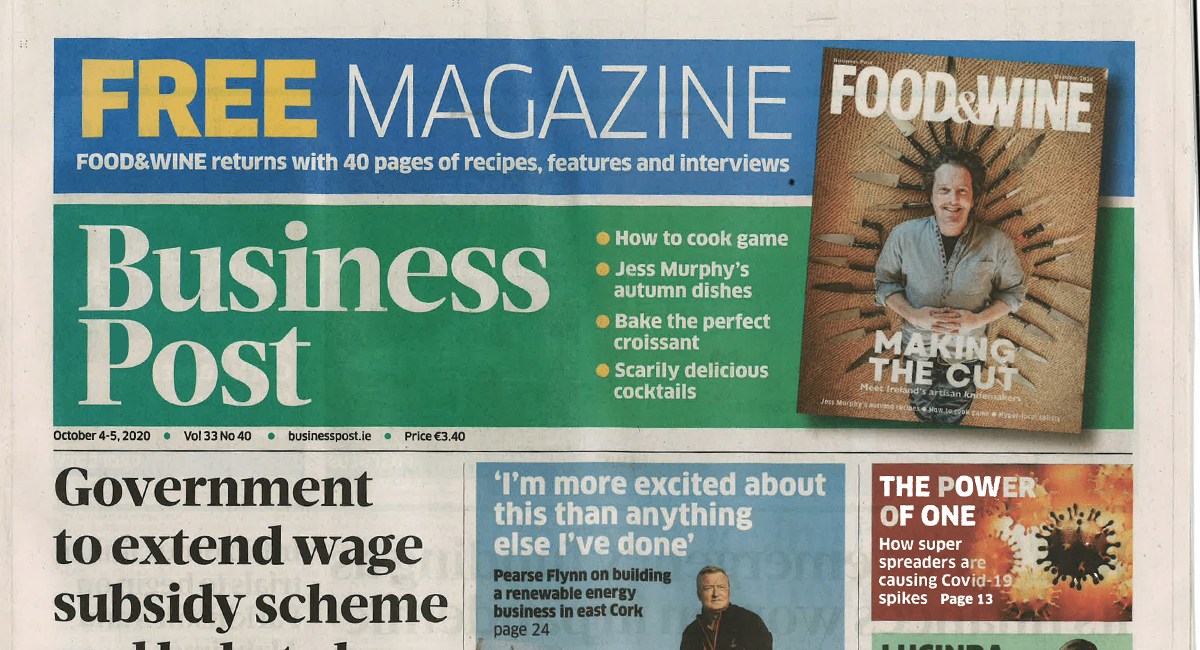
No matter how far away you are from retirement, it is always a good time to start a pension or to build up your contributions. And the tax benefits are considerable, writes Siobhán Maguire
Sunday Business Post
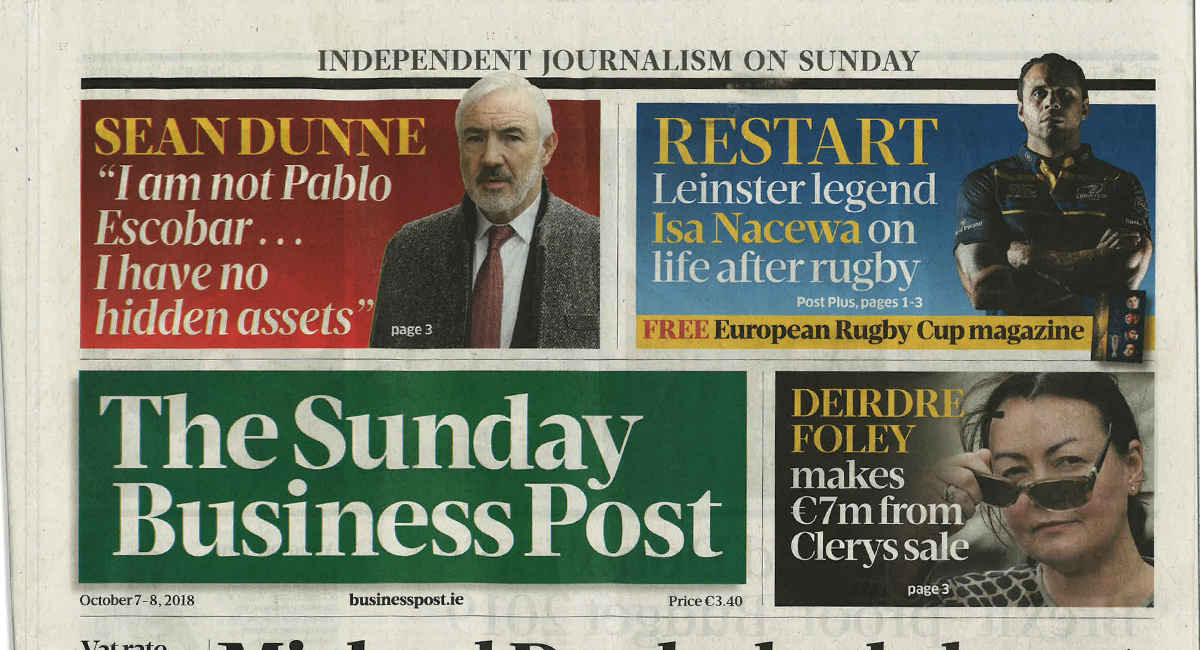
The area of pension guidance can be a minefield, but it’s one which Highfield Financial Planning is happy to negotiate for its clients
Sunday Business Post
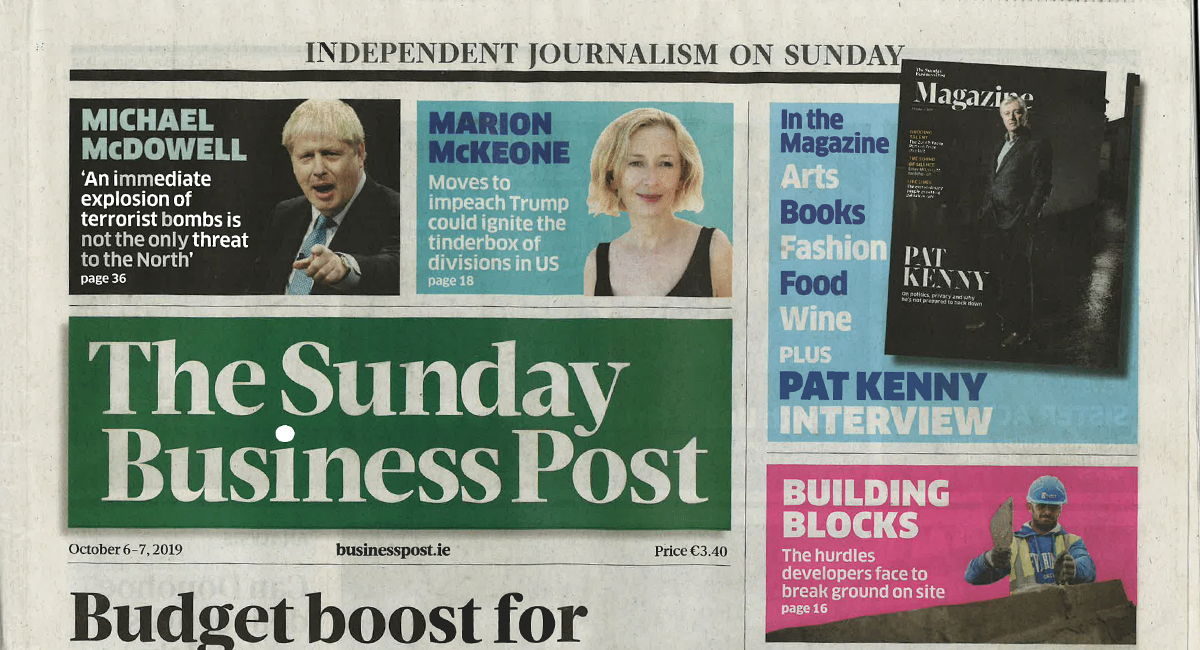
Eoghan Gavigan, a specialist investment adviser and certified financial planner at Highfield Financial Planning, has advice for those looking to start a pension, writes Siobhán Maguire
About Highfield Financial Planning
We provide superior advice on Financial Planning services to business owners, professionals and their families. The principal of the firm Eoghan Gavigan has over 29 years’ experience in banking and finance across Treasury, Lending and Wealth Management and is a Qualified Financial Adviser (QFA) and a Certified Financial Planner (CFP). The CFP qualification is the world’s most respected industry designation, held by only a select number of advisers. As Specialist Investment Advisers we can provide you with detailed investment advice on your pensions and investments.
We want you to be comfortable in your dealings with us. We provide a number of suggestions here for ways that you may be able to obtain comfort that we are the right Financial Planner for you.







Our Process
Why We Changed Our Business To Focus On Financial Planning
Having been involved in Financial Services for over 29 years our experience is that most people feel that they aren’t well served by the traditional financial advice model. Commission based sales creates a huge conflict of interest as in order for a financial adviser to be paid for his work he must sell you a financial product.
Many people who approach us for financial planning services tell us that they feel that what they have been getting is sales, and they want advice.
Our most successful clients use Financial Planning to manage their finances and accumulate wealth. Studies have shown that people who engage in Financial Planning are more on track with their financial affairs and have higher net worths.


Who Is Financial Planning Suitable For?
- You own your own home or are planning to purchase a home soon
- You have surplus income (although you may well feel that it is not being used optimally)
- You may have financial products (pensions, life assurance, investments etc) but they were sold to you by someone who had a target to achieve
- You are interested in developing a cohesive plan to achieve your financial objectives




Want to hear more?
Make contact today and we’ll tell you more about the kind of work we do.
CONTACT USBOOK A VIDEO CALL