
Maturing Your Pension
What Does It Mean to Mature a Pension?
Maturing your pension means accessing the benefits you have been building up over your working life. It is one of the most significant financial decisions you will make, and the choices you make at this point can have a lasting impact on your income and financial security in retirement.
At Highfield Financial Planning, over 85% of our work involves pensions and retirement planning. We work with company directors, business owners, PAYE employees and professionals across Ireland who are approaching retirement and want to make sure they get this decision right.
When Can You Access Your Pension?
The retirement age on pension arrangements in Ireland is between 60 and 70, and the most common retirement age is 65. From age 50, some pension holders may be able to access benefits on early retirement, subject to it being permitted by the scheme rules.
If you are a company director with an executive pension or a self-employed person with a personal pension or PRSA, specific rules apply to when and how you can draw down your benefits. We will clarify exactly what applies in your situation before making any recommendations.
Your Pension Maturity Options in Ireland
When the time comes to mature your pension, you will typically have three main decisions to make:
1. Your Tax-Free Lump Sum
You are entitled to take a portion of your pension fund as a tax-free lump sum at retirement. There are two methods for calculating this, and the one that applies to you depends on your pension type and circumstances. The lump sum is subject to a lifetime limit set by Revenue, and anything above that limit is taxable. We will calculate the most tax-efficient approach for your specific situation.
2. Approved Retirement Fund (ARF) or Annuity
After taking your lump sum, the balance of your fund can be placed into an Approved Retirement Fund (ARF) or used to purchase an annuity.
An ARF is an investment account that you control. You decide how your money is invested and how much income you draw down each year. The income drawn is subject to income tax, USC and (until state pension age) PRSI. There is also an imputed distribution rule, which means that Revenue requires a minimum withdrawal from your ARF each year regardless of whether you choose to take one.
An annuity is an income for life, purchased from an insurance company. It provides certainty and cannot be outlived, but it is irreversible and inflexible. Once purchased, you cannot change the terms.
Most of our clients who have accumulated significant pension funds opt for an ARF, as it offers flexibility, continued investment growth potential, and the ability to pass the fund to a spouse or other beneficiaries on death. However, for some clients, particularly those without other guaranteed income, an annuity or a combination of both can make sense.
3. Investment Advice for Your ARF
If you choose an ARF as your retirement income vehicle, how you invest it matters as much as the decision to use one. Your investment strategy needs to balance growth, income and risk in a way that reflects your circumstances and how long the fund needs to last.
At Highfield Financial Planning, we provide detailed investment advice for ARF clients, including strategies specifically designed to protect retirement income against sequence of returns risk and market volatility. Find out more about how to invest your ARF at retirement.
I sought out Eoghan’s advice on how to best structure my pensions upon retirement. He provided excellent professional financial advice taking into account what was best for me personally. Pensions are a very complex area and he made the whole process very smooth. I would highly recommend Eoghan to anyone seeking independent financial advice.
Google Review by Fionnuala Burke, 2 December 2025 – check out this and our other Google reviews.
Check us out in the media by clicking on this image
The Imputed Distribution Explained
One aspect of ARF ownership that catches people off guard is the imputed distribution. Revenue requires that a minimum percentage of your ARF is treated as income each year for tax purposes, whether you draw it down or not.
The current rates are:
- 4% per annum from the year in which you turn age 61
- 5% per annum from the year in which you turn age 71
- 6% per annum where the fund exceeds €2 million
Understanding this rule is important for cashflow planning in retirement, as it can affect the level of income tax you will pay.
Cashflow Planning at Retirement
Deciding how to mature your pension is not just a once-off event. It is the starting point for a retirement income plan that needs to work across potentially 25 to 30 years or more.
At Highfield Financial Planning, we use cashflow modelling software to map out your income and expenditure projections throughout retirement. This allows you to see clearly:
- Whether your pension fund and other assets are sufficient to sustain your lifestyle
- The impact of different drawdown strategies on your fund over time
- How State Pension income integrates with your ARF or annuity income
- The tax efficiency of different income strategies year by year
- What happens to your financial position under different investment return scenarios
This kind of structured planning removes much of the uncertainty from retirement and allows you to make decisions with confidence.
Why Use a Financial Planner?
When you mature your pension, you will typically be dealing with your pension provider directly or through a broker tied to a product provider. This kind of advice is purely product focused. Our advice is built entirely around your situation and your objectives, and if you choose you can use us for your product.
Eoghan Gavigan CFP® QFA has over 29 years of experience in banking and financial services, including 16 years as a business and commercial lender before moving into financial planning in 2015. He holds the Certified Financial Planner (CFP®) designation, held by fewer than 1,000 people in Ireland, and is regulated by the Central Bank of Ireland.
We advise clients across Ireland on pension maturity, retirement income planning, and investment management from our offices at Trinity Street, Dublin 2.
How We Do Financial Advice
Contact us today on 01 546 1100 or book a no-obligation Zoom call with us here.
Frequently Asked Questions
Q: At what age can I mature my pension in Ireland?
A: The minimum retirement age under most pension arrangements is 60, though some occupational pension schemes allow access from age 50 in the case of early retirement. Company directors and self-employed individuals have specific rules that apply. The State Pension is payable from age 66 but can be deferred if it is to your advantage to do so.
Q: How much of my pension can I take as a tax-free lump sum?
A: For some pensions there are two methods for calculating your tax-free lump sum, and the better one for you depends on your pension type and circumstances. The lifetime tax-free limit is €200,000. Amounts between €200,000 and €500,000 are taxed at 20%. Anything above €500,000 is taxed at your marginal rate. We will calculate the most advantageous approach for your specific situation before you make any decisions.
Q: What is an ARF and how does it work?
A: An Approved Retirement Fund (ARF) is an investment account that you own and control after retirement. You choose how the fund is invested and how much income you draw down each year. Income drawn from an ARF is subject to income tax, USC and PRSI in the normal way. There is also a mandatory minimum withdrawal each year under Revenue’s imputed distribution rules.
Q: What is the difference between an ARF and an annuity?
A: An ARF keeps your pension fund invested and allows flexible income withdrawals throughout retirement. An annuity converts your fund into a guaranteed income for life, paid by an insurance company. An annuity offers certainty but is irreversible and inflexible. An ARF offers flexibility and the potential for continued growth but involves investment risk. Some clients use a combination of both, depending on their income needs and circumstances.
Q: What is the imputed distribution on an ARF?
A: Revenue requires that a minimum percentage of your ARF value is treated as income each year and subjected to tax, whether you withdraw it or not. The current rates are 4%, 5% or 6% depending on your circumstances.
Q: Can I pass my ARF to my family when I die?
A: Yes. An ARF can be passed to a surviving spouse or civil partner, who can take it as their own ARF without an immediate tax charge. If passed to a child aged 21 or over, it is subject to income tax at 30%. If passed to a child under 21, it is subject to Capital Acquisitions Tax in the normal way. If it passes to any other beneficiary, normal estate rules apply.
Q: What is the difference between a Defined Contribution and a Defined Benefit pension at retirement?
A: A Defined Contribution pension is one where the retirement fund is the result of accumulated contributions and investment returns. A Defined Benefit pension promises a specific level of income based on salary and years of service, regardless of investment performance. The options available at retirement differ between the two types, and where you have a combination of both, we will advise on how best to structure your overall retirement income.
Q: Do I need to buy an annuity with my pension?
A: No. The requirement to purchase an annuity was abolished for most pension types in Ireland. The majority of clients now use an ARF as their primary vehicle for retirement income, though an annuity may still be appropriate in certain circumstances, particularly where guaranteed income is a priority.
Q: Can I take my pension early if I am seriously ill?
A: In cases of serious ill health, it may be possible to access pension benefits early and, in some cases, to take the entire fund as a tax-free lump sum. The rules depend on the type of pension and the severity of the illness. We can advise on what options may be available in these circumstances.
Q: Do I need financial advice when maturing my pension?
A: The decisions made when maturing a pension are largely irreversible – particularly in relation to annuity purchase. Getting advice from a Certified Financial Planner ensures you understand all your options, the tax implications, and the long-term impact of each choice. At Highfield Financial Planning, we work through the full picture with you before making any recommendation.
CONTACT US
By Telephone 01 546 1100
Use the Form on this Page
Email to [email protected]
Book a Zoom call with us here.
Happy to start the process? Click here to complete a factfind and tell us your objectives
The material and information contained on this website is for general information purposes only. Neither the writer nor Highfield Financial Planning Ltd makes any warranty as to the completeness, accuracy or reliability of the information or the suitability or availability of products or services, referred to on the website, for any purpose. You should not rely on any information contained on this website as a basis for making any financial, legal, taxation or other decision. The information presented does not include all the considerations which are relevant to the topic discussed as to do so would render it un-readable. When considering any financial issue you should seek the advice of a suitably qualified adviser.
BOOK A FREE NO-OBLIGATION CHAT
By Telephone 01 546 1100
Use the Form on this Page
Email to [email protected]
Book a Zoom call with us here.
Happy to start the process? Click here to complete a factfind and tell us your objectives
The material and information contained on this website is for general information purposes only. Neither the writer nor Highfield Financial Planning Ltd makes any warranty as to the completeness, accuracy or reliability of the information or the suitability or availability of products or services, referred to on the website, for any purpose. You should not rely on any information contained on this website as a basis for making any financial, legal, taxation or other decision. The information presented does not include all the considerations which are relevant to the topic discussed as to do so would render it un-readable. When considering any financial issue you should seek the advice of a suitably qualified adviser.
Highfield Financial Planning in the Media
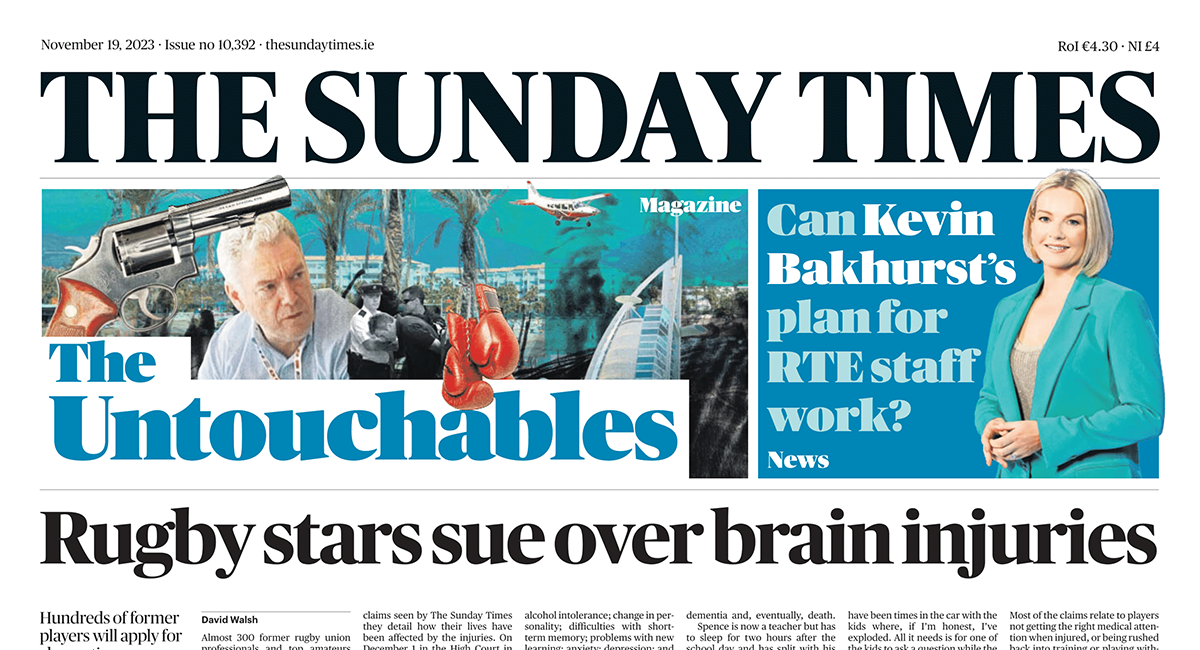
The Sunday Times
In the sport of target pistol shooting there is a saying, “slow is smooth, smooth is fast”, which refers to the way to approach drawing and firing a pistol quickly and accurately. The learner shooter who focuses on practising the correct technique slowly, only building in speed later, will win the day nine times out of ten.
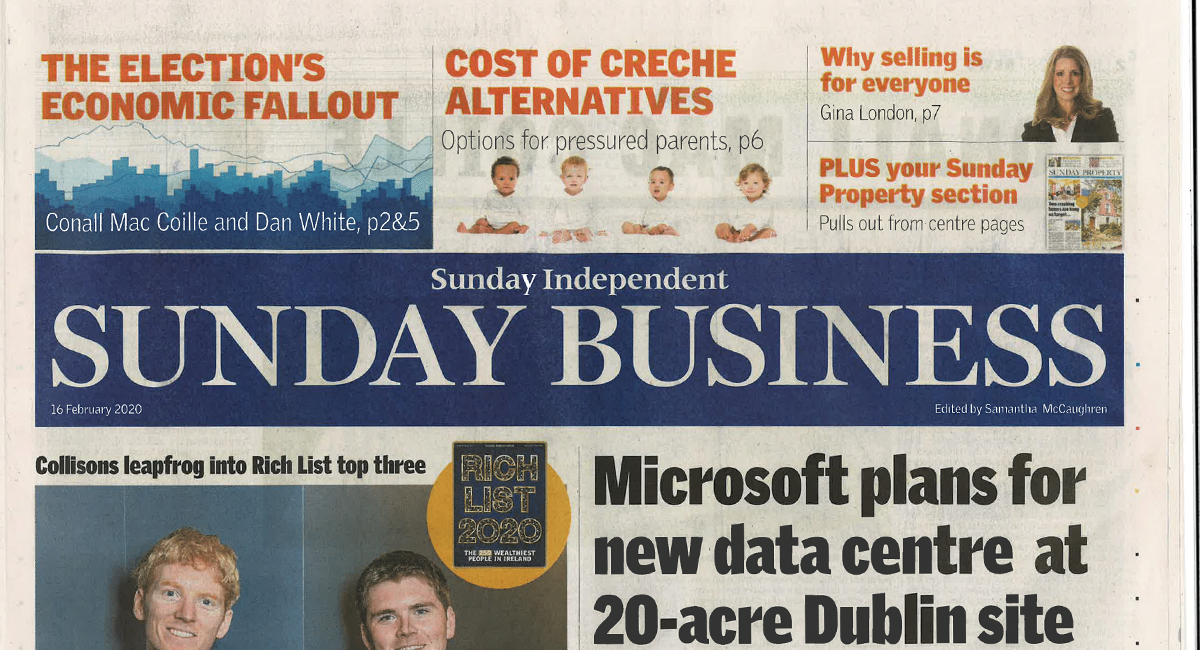
The Sunday Independent
A pension is a term that can seem distant to many, especially if you’re at the beginning of your career. But it is a vital part of long-term financial planning, designed to provide you with a source of income in your retirement years. As the pension landscape continues to evolve, understanding the fundamentals and staying informed about the changes is crucial. So, what do you need to know?
The Sunday Times
I have been sitting on about €140,000 in my current account for the past year. It’s what was left over when I sold a property. I keep reading about inflation and how banks are paying no interest and might start paying negative interest, and so on.

The Sunday Times
Would-be investors have a difficult decision to make when considering their options. If they are going to increase their wealth, they will need, at a minimum, to beat inflation and whatever they are paying in charges.

Business Post
If you’re at the beginning of your working life or are simply new to pensions, we look at what you need to know
The Sunday Times
The phrase “Morton’s fork” can be traced back to the time of King Henry VII in the 15th century, when John Morton, then the Archbishop of Canterbury and lord chancellor, rationalised that a tax levied by the king was just.
Sunday Independent
Q I HAVE €150,000 which I want to invest for between 10 and 15 years — with a view to using it to fund my retirement in the future. I’m 50 years old. I am interested in property investment and had considered using the lump sum to buy a property outright.
The Sunday Times
If I asked 10 people on the street how long they thought pensions had existed, what do you think they would say? Since the 1960s, the formation of the state, or Victorian times?
Business Post
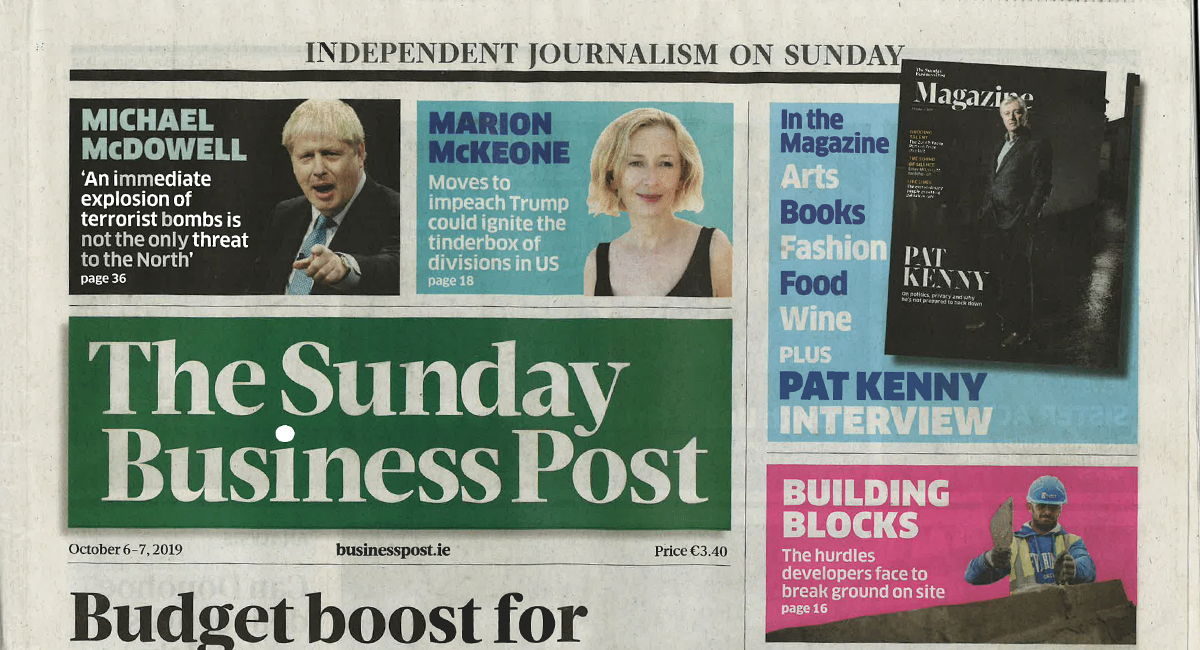
No matter how far away you are from retirement, it is always a good time to start a pension or to build up your contributions. And the tax benefits are considerable, writes Siobhán Maguire
Sunday Business Post
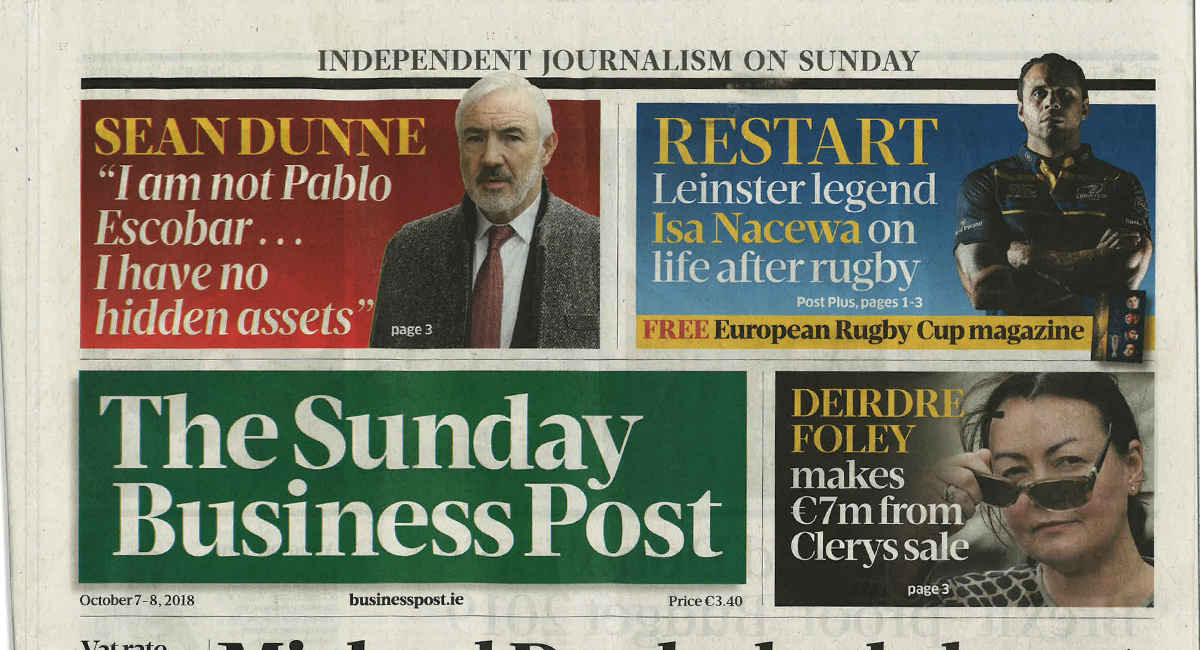
The area of pension guidance can be a minefield, but it’s one which Highfield Financial Planning is happy to negotiate for its clients
Sunday Business Post
Eoghan Gavigan, a specialist investment adviser and certified financial planner at Highfield Financial Planning, has advice for those looking to start a pension, writes Siobhán Maguire
About Highfield Financial Planning
We provide superior advice on Financial Planning services to business owners, professionals and their families. The principal of the firm Eoghan Gavigan has over 29 years’ experience in banking and finance across Treasury, Lending and Wealth Management and is a Qualified Financial Adviser (QFA) and a Certified Financial Planner (CFP). The CFP qualification is the world’s most respected industry designation, held by only a select number of advisers. As Specialist Investment Advisers we can provide you with detailed investment advice on your pensions and investments.
We want you to be comfortable in your dealings with us. We provide a number of suggestions here for ways that you may be able to obtain comfort that we are the right Financial Planner for you.






Want to hear more?
Make contact today and we’ll tell you more about the kind of work we do.
CONTACT USBOOK A VIDEO CALL